
Destinations
Dharamshala and Kangra
Tibetan Dharamshala, tea gardens down at Palampur, the little train through Kangra, and the Dhauladhar standing right over you. The best base for a first trip, or if you would rather stay in one place than five.
Suits — first trips, long stays, walkers
Read the full descriptionClose the description
Dharamshala is two towns. The lower one is an ordinary Indian district headquarters. The upper one, McLeod Ganj, has been the seat of the Tibetan government in exile since 1960 and feels almost nothing like the rest of the state — Tibetan food, monasteries, prayer flags, and a steady population of people who came for a week and are still here.
Behind both of them the Dhauladhar goes almost straight up. That is the thing people remember.
It is the easiest place in Himachal to spend a long time. Everything else on this list is somewhere you go and come back from; this is somewhere you stay.
Which of the towns to stay in
This is the question we are asked most about the region, and the four answers are genuinely different places within twenty minutes of each other.
McLeod Ganj is the obvious one — the temple, the cafés, the shops, and the noise. Central, walkable, and in season quite full.
Dharamkot is twenty minutes above McLeod on foot, quieter, greener, and the last stretch is walk-in only, which is either the attraction or the problem depending on your luggage.
Naddi looks straight at the Dhauladhar and has the best views of the four, with the trade-off that you will drive or walk down for anything you want to do.
Lower Dharamshala is the district town. Nobody comes for it, but it is where the buses, banks and hospital are, and hotels there are cheaper and less full.
The valley is bigger than the two towns
Most itineraries treat this region as McLeod Ganj plus a day trip, which sells it short. The Kangra valley runs east for eighty kilometres with the range above it the whole way: Kangra town and its fort, the rock-cut temples at Masroor, Baijnath’s ninth-century Shiva temple, the tea gardens at Palampur, and Bir and Billing further on.
That eastern half is where the region stops being a Tibetan enclave and starts being Himachal, and it is worth two days rather than an afternoon.
Getting here
Gaggal, about forty-five minutes from McLeod Ganj, is the nearest airport and the best option when a flight actually operates — it is small, has few flights, and diverts in bad weather, usually to Amritsar or Chandigarh. Amritsar at four to five hours is the reliable alternative, Chandigarh at six to seven the one with the most flights.
There is no railway worth using for arrival; the narrow-gauge line from Pathankot is a lovely thing to ride and a slow way to travel.
- Altitude
- 1,450m at McLeod Ganj, 700m down in the valley
- Nearest airport
- Gaggal (Kangra), 45 minutes
- From Chandigarh
- 6–7 hours by road
- From Delhi
- 10–12 hours by road
- Give it
- Two days minimum, a week if you can
- Best months
- March to June, and September to November. December and January are cold and clear.
Worth your time
What to actually go and see
Tsuglagkhang, the Dalai Lama's temple
The main temple complex in McLeod Ganj, with Namgyal monastery beside it and the Tibet Museum in the same compound. It is a working monastery, so go in the morning when it is being used rather than looked at.
Bhagsunag and the waterfall
An old temple with hot springs and a twenty-minute walk up to the falls behind it. Keep going past the top towards Dharamkot and the crowd falls away.
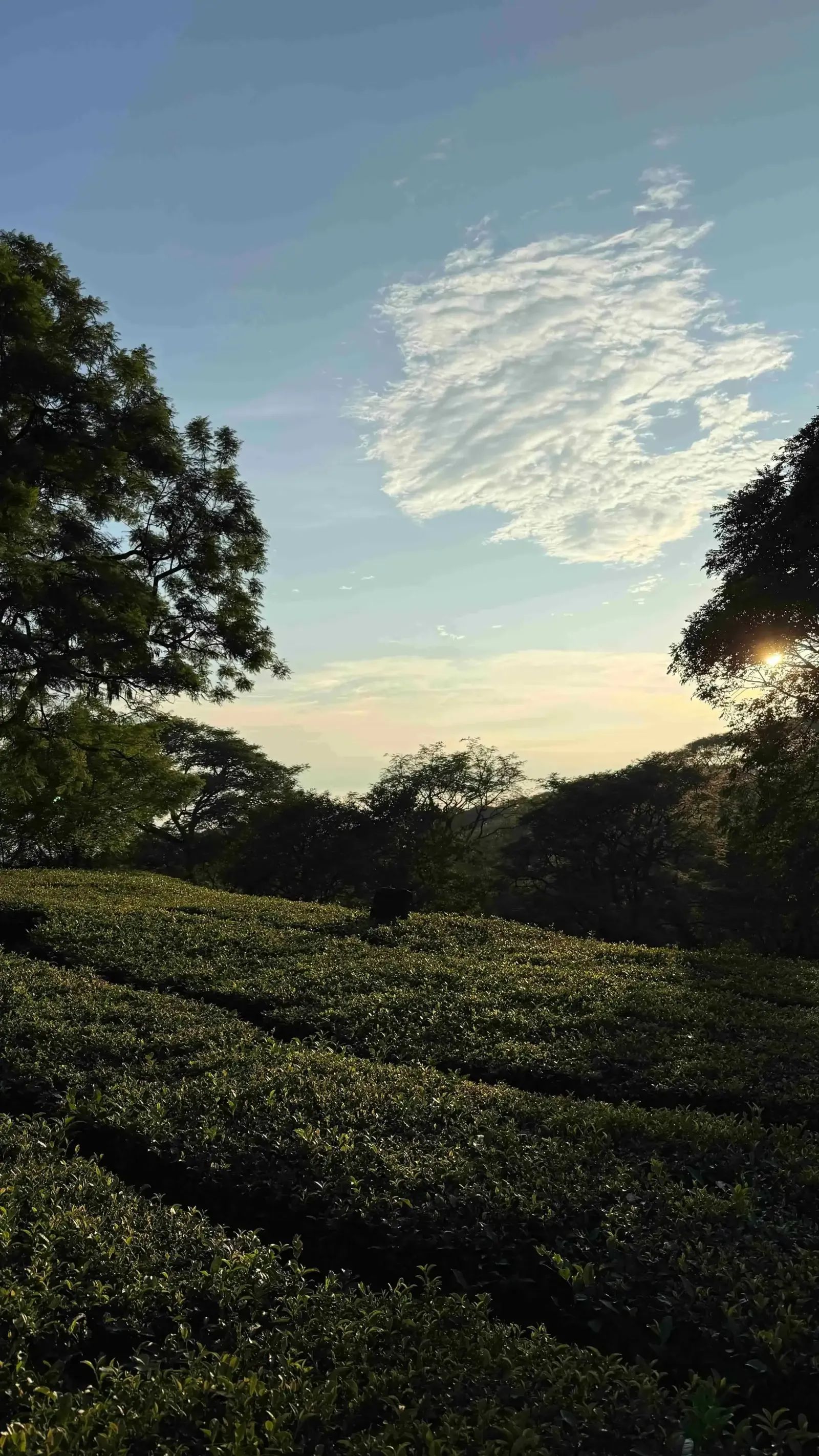
The Palampur tea gardens
An hour down the valley. Kangra tea has been grown here since the 1850s and several of the estates will show you round if you arrange it first.
The Kangra Valley Railway
A narrow-gauge line laid in 1929 that runs 164km from Pathankot to Joginder Nagar. Slow, and that is the appeal. We put people on a section of it and meet them at the other end.
Bir Billing
Half an hour away, and one of the best paragliding sites in the world. Tandem flights are straightforward to arrange and you do not need any experience.
The Dhauladhar itself
The range rises from about 700m to over 4,500m in a very short horizontal distance, which is why it looks the way it does from the valley floor. The Triund walk is the usual way to get up close — nine kilometres, doable in a day.
Keep reading
Places in Dharamshala and Kangra
Keep reading