
Destinations
Kullu town and the Beas
Most people drive through Kullu on the way to Manali and see a bypass. The town itself is a working valley capital with a week-long Dussehra that starts when everyone else's has finished.
Suits — festivals, temples, anyone stopping between Shimla and Manali
Read the full descriptionClose the description
Kullu has the misfortune of being on the road to Manali. Almost everyone passes through it, very few stop, and the strip of highway they see is not the town.
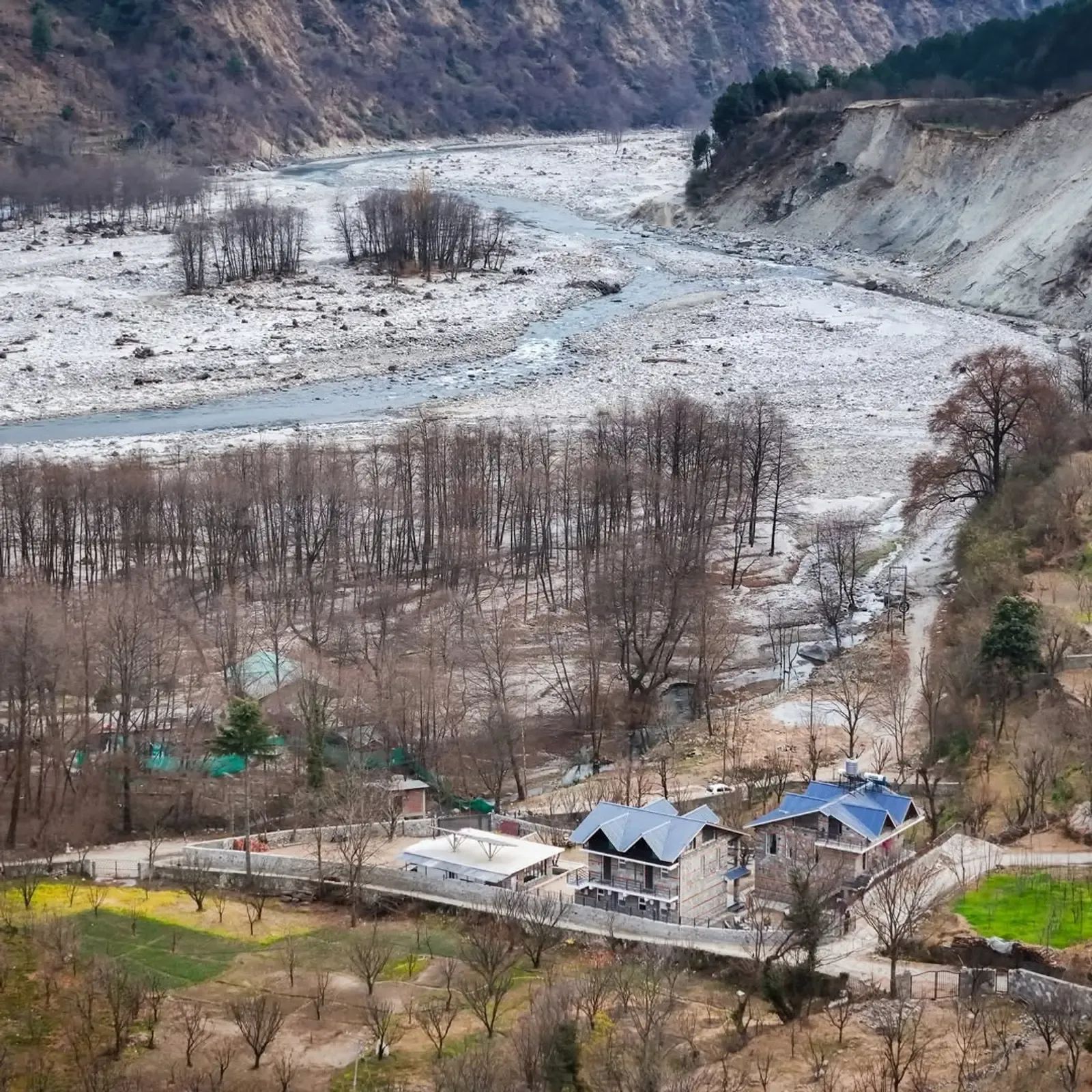
What is worth stopping for is the valley’s own life, which is more intact here than it is forty kilometres north. Kullu is the administrative centre for a district full of villages that each have their own deity, and once a year all of those deities come here at once. Kullu Dussehra is not a re-enactment laid on for anybody — it is a week of processions, village bands and negotiations between temple committees, and the visitors are incidental to it.
The other reason to stop is Bijli Mahadev. The road climbs out of the valley to a ridge at 2,460m, and from the temple at the top you can see both the Beas and the Parvati coming together below. The lightning story attached to the iron staff is the sort of thing a guidebook repeats without checking; what is not in doubt is that it is a superb place to stand.
If you are buying a shawl, buy it here rather than in Manali, and buy it somewhere with looms on the premises. Everything sold on the Mall was made within twenty kilometres of this town and marked up on the way.
- Altitude
- 1,220m, so noticeably warmer than Manali
- Nearest airport
- Bhuntar, 10km. The closest airstrip to anywhere in this valley
- From Manali
- 40km, about 1.5 hours
- From Dharamshala
- 6–7 hours
- Give it
- Half a day, unless you have come for Dussehra
- Best months
- March to June, and October for Dussehra. The valley floor is warm enough to be pleasant in winter.
Worth your time
What to actually go and see
Kullu Dussehra
It begins on the day Dussehra ends elsewhere in India and runs for seven days. Around two hundred village deities are carried in from across the valley to the Dhalpur maidan. It is a genuine gathering rather than a performance, and the town is completely full.
Bijli Mahadev
A temple on a ridge above the valley at 2,460m with a tall iron staff that is struck by lightning, and a Shiva lingam that is said to shatter and be reset each time. A road goes most of the way, then about 2km on foot.
Raghunath temple
The town's principal temple, holding an image of Rama brought from Ayodhya in the seventeenth century. It is the deity that presides over Dussehra, and the whole festival is arranged around it.
The shawl looms
Kullu shawls are woven here rather than merely sold here, and the difference is visible if you go to a working co-operative rather than a highway showroom. Ask for handloom and check the reverse of the border.
The Great Himalayan National Park
The entrance at Sairopa is about an hour and a half away. A UNESCO site since 2014, and one of the few parks in India where the buffer zone has genuine community involvement. Trekking inside needs a permit and a guide.
Kullu and the Beas, photographed
7 photographs.


Show all 7 photographsShow fewer photographs

Keep reading