
Destinations
Mandi, Rewalsar and Prashar
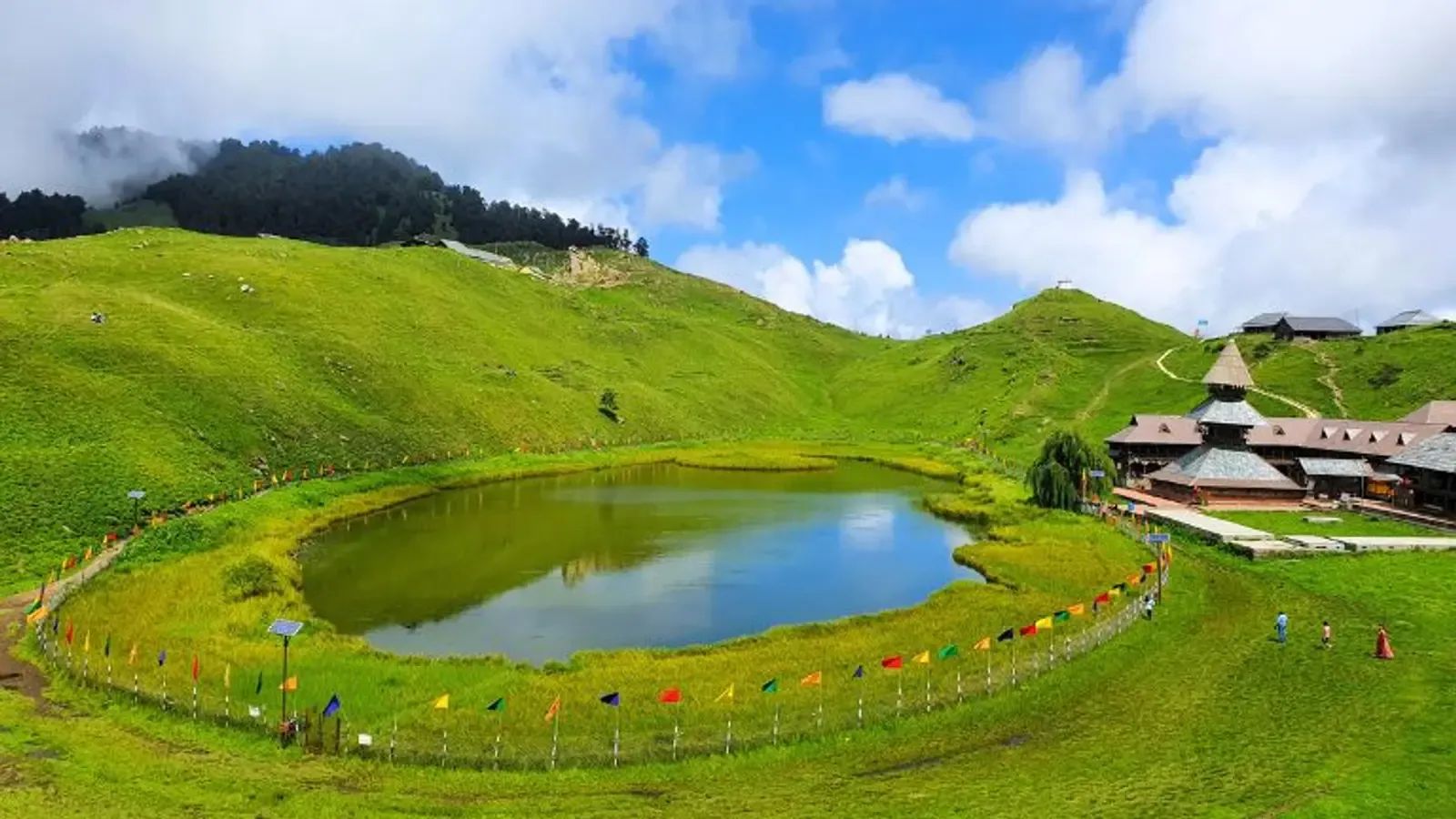
A town with eighty-one temples, a lake three religions hold sacred, and a thirteenth-century pagoda beside a lake at 2,730m with a floating island in it. All within an hour of each other.
Suits — temples, architecture, a stop between Chandigarh and Manali
Read the full descriptionClose the description
Mandi is where the Beas leaves the mountains, and it was a state capital for six hundred years before it was a district headquarters. The old town is a grid of stone temples with a bazaar grown around them, and it is genuinely dense — you walk fifty metres and pass three shrines from the 1600s wedged between shops.
Almost everyone drives past it on the way to Manali. It deserves an afternoon.
Rewalsar is an hour up the hill and is a strange, good place. A small lake with a Buddhist monastery on one side, a Hindu temple on another and a gurudwara on a third, all within a few hundred metres, all in continuous use. Padmasambhava is said to have set out for Tibet from here, which makes it a pilgrimage site for Tibetans; Guru Gobind Singh stayed here, which makes it one for Sikhs. The reed beds on the water genuinely do move about.
Prashar is the one people come for now, and it is worth the effort with two qualifications. The last twenty kilometres are narrow, rough in patches and slow, and it is 2,730m — noticeably cold once the sun is off it, even in May. Go early, because the light on the bowl in the morning is the whole point and by midday in season there are a good number of cars parked on the grass.
- Altitude
- 800m at Mandi, 1,360m at Rewalsar, 2,730m at Prashar
- From Mandi to Rewalsar
- 24km, about an hour
- From Mandi to Prashar
- 50km, 2–2.5 hours, the last 20km narrow
- From Dharamshala
- 4–4.5 hours to Mandi
- Give it
- A full day for all three, or a night at Mandi
- Best months
- October to June. Prashar is snowbound and the last stretch of road up is impassable in deep winter.
Worth your time
What to actually go and see
Mandi's temples
Around eighty-one of them, mostly stone shikhara work from the sixteenth and seventeenth centuries, which is why the town gets called the Varanasi of the hills. Bhootnath in the middle of the bazaar is the one everybody sees.
Panchvaktra
A temple at the meeting of the Beas and the Suketi with a five-faced Shiva inside. It sits low by the water and has been through several floods, which is part of what makes the stonework worth looking at.
Rewalsar lake
Sacred to Buddhists as Tso Pema, where Padmasambhava is said to have left for Tibet, and also to Hindus and to Sikhs, who mark Guru Gobind Singh's stay here. Three sets of shrines around one small square of water, and beds of reed that drift.
Prashar lake
A small deep lake at 2,730m with a floating island of matted vegetation that moves around it, and no one has established how deep the water is. The bowl of meadow it sits in is what most people remember.
The Prashar temple
A three-tiered pagoda in wood and slate, dated to the thirteenth century and dedicated to the sage Prashar. The carving on the eaves and door frame is the best surviving example of this style in the district.
Keep reading