
Destinations
Chamba and Manimahesh
A town that has been continuously inhabited since around 920 AD, with stone temples to match, and above it a lake at 4,080m under a peak nobody has been allowed to climb.
Suits — temples, pilgrimage, museums, walkers with a head for altitude
Read the full descriptionClose the description
Chamba was the capital of a state that ran from the tenth century until 1948, and unlike most hill capitals it was never sacked, never abandoned and never rebuilt after an earthquake. What is standing is what was built.
The Lakshmi Narayan complex is the reason to come. Six stone temples in one enclosure, the earliest around 920 AD, in the north Indian shikhara form but carrying wooden canopies over their spires because the snow here would otherwise sit on them. There is nothing else quite like that combination, and it is a working temple rather than a monument.
The Bhuri Singh Museum, ten minutes away, holds the Chamba miniatures and the rumals — silk squares embroidered with double-sided satin stitch so that both faces are finished. The technique is local and is still practised.
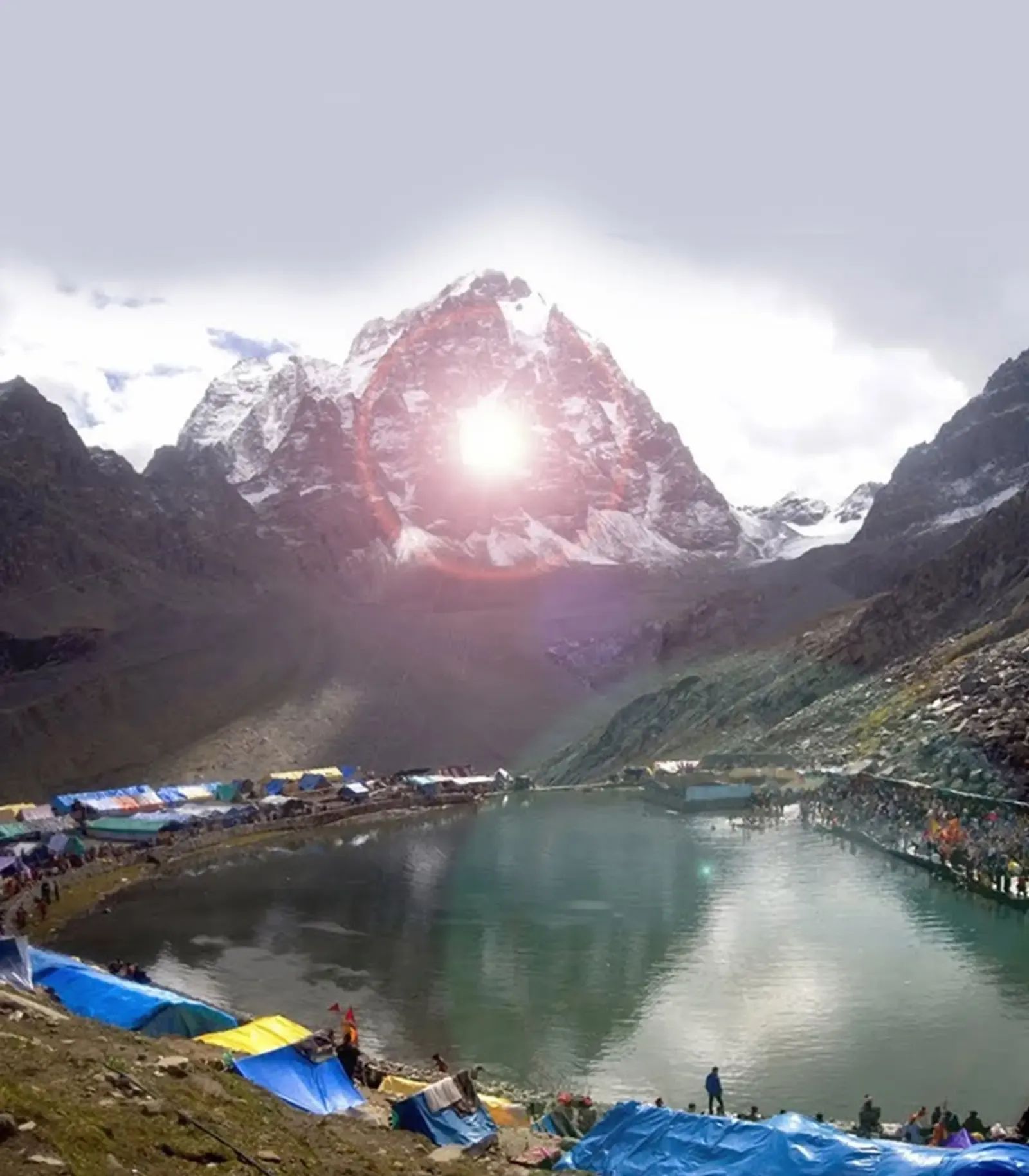
Manimahesh is a different proposition and needs saying plainly. The lake is at 4,080m below a peak that has never been climbed because nobody attempts it, and the pilgrimage to it runs on a short calendar between Janmashtami and Radhashtami. In that window the thirteen kilometres up from Hadsar are busy, supplied and supported. Outside it there is nothing on the route, the weather turns fast and the ground is snowbound for most of the year.
We drive to Hadsar. The walk from there is yours, and it is a serious one — nineteen hundred metres of climb, best taken over two days with a night at Dhancho rather than pushed in one.
- Altitude
- 996m at Chamba, 4,080m at Manimahesh lake
- From Dalhousie
- 56km, about 2 hours
- From Dharamshala
- 190km, 6–7 hours
- The yatra trek
- 13km from Hadsar, climbing about 1,900m. Two days is sensible
- Give it
- A day for Chamba. The yatra is a separate trip with its own season
- Best months
- March to June for Chamba. The Manimahesh yatra runs in August and September and the route is impassable outside it.
Worth your time
What to actually go and see
The Lakshmi Narayan complex
Six stone temples in one courtyard, the oldest from the tenth century, built in the shikhara style with wooden umbrella roofs added against the snow. It is the best single thing in the district and it is in the middle of the town.
The Bhuri Singh Museum
Opened in 1908, and holding the Chamba and Basohli miniature paintings, copper plate inscriptions and the embroidered rumals the town is known for. Small, well kept, and worth an hour.
The Chaugan
The long grass maidan the town is arranged around, used for everything from cricket to the Minjar fair. Chamba is unusual in the hills for having flat ground at its centre.
The Minjar fair
A week at the end of July or in early August, ending with silk tassels being floated on the Ravi. It is a working festival for the district rather than a tourist event.
Manimahesh Kailash
The 5,653m peak above the lake, held to be a residence of Shiva and never summited — attempts are not made, out of respect. The lake below it is the object of the yatra.
The yatra itself
From Hadsar it is about 13km on foot to the lake, via Dhancho. The main season is between Janmashtami and Radhashtami, when the route is staffed and supplied, and outside those weeks it is not a walk to attempt casually.
Keep reading