
Destinations
Sangla and Chitkul
The Baspa valley, off the Sutlej at Karcham, ending at the last inhabited village on the old road to Tibet. Apple orchards, timber-and-stone houses, and a river the colour of glass.
Suits — Spiti trips broken sensibly, orchards, first high-altitude nights
Read the full descriptionClose the description
The Baspa comes in from the east and joins the Sutlej at Karcham, and the road up it is one of the good ones. Within twenty minutes of leaving the highway the gorge opens into a broad valley of orchards and timber villages with peaks on both sides, and it feels a long way from anywhere.
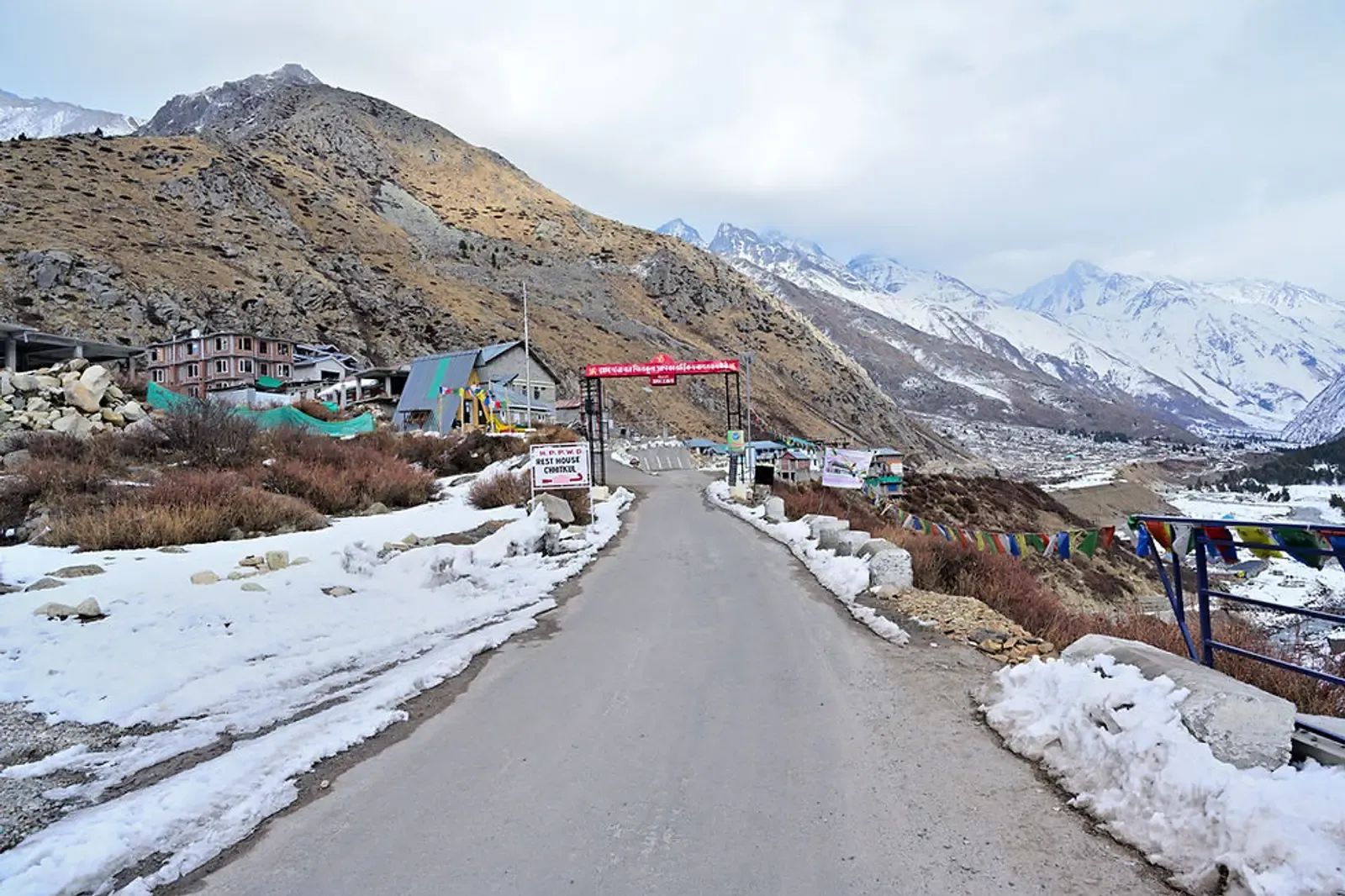
Sangla is the main village and where most people stay. Chitkul is twenty-four kilometres further and eight hundred metres higher, and is the last inhabited place on this side — beyond it the valley runs towards the border and you stop. That fact is most of why people come, and the village would be worth the drive anyway for the houses, which are stone and deodar in the Kinnauri manner with slate roofs and carved balconies.
Take the altitude seriously. Chitkul is 3,450m, and people arriving from Shimla in one day and sleeping high have a poor night. On our Spiti routes this valley is deliberately the first high stop, and we sleep at Sangla rather than Chitkul for exactly that reason.
The road in from Karcham is cut into the gorge wall and has had rockfall closures. It is normally fine and it is occasionally not, and that is worth an hour’s flexibility in a plan rather than a change of plan.
No inner line permit is needed for this valley. That requirement starts further on, if you continue towards Spiti, and we handle it.
- Altitude
- 2,700m at Sangla, 3,450m at Chitkul
- From Shimla
- 220km, 8–9 hours. Not a day's drive to do in one go
- Sangla to Chitkul
- 24km, about an hour
- Permits
- None needed for the Baspa. The inner line applies further on, towards Spiti
- Give it
- Two nights at Sangla, and a day up to Chitkul
- Best months
- May to October. The valley is cut off by snow for much of the winter and the road in can be shut.
Worth your time
What to actually go and see
Chitkul
The last village with people living in it on the Indian side of this valley, at 3,450m. Beyond it the track goes towards the border and stops being open to you. Timber houses, a Mathi Devi temple, and a very cold river.
Kamru fort
A tower fort above Sangla in stacked stone and deodar beams, once the seat of the Bushahr rulers. There is a dress requirement to go up and a caretaker who will explain it. The climb is short and steep.
Batseri
A village between Sangla and Chitkul with some of the best surviving timber architecture in Kinnaur, including a temple with heavy carved eaves. Quieter than either end of the valley.
The orchards
Kinnauri apples come off in September and October and the whole valley works around it. Chilgoza pine nuts and rajma are the other two crops, and both are worth buying here rather than in Shimla.
The Baspa
Snow-fed, extremely clear and extremely cold. It runs the length of the valley and most places to stay are on it. Camping on the bank is common and gets properly cold after dark even in June.
Keep reading