
Kinnaur: Sangla, Chitkul and Kalpa
The Sutlej gorge as far as the Baspa, then a week in two valleys that most people only see through a car window on the way to Spiti. Apple country, Chitkul at the end of the road, and Kinner Kailash out of the bedroom window.
- Sarahan
- Sangla
- Chitkul
- Kalpa
- Reckong Peo
Good for — Anyone who wants Spiti's country without Spiti's altitude, and photographers
Read the full descriptionClose the description
Almost every vehicle that goes up the Sutlej is on its way somewhere else. Kinnaur is the corridor to Spiti, and the standard treatment of it is two nights and four hundred kilometres of windscreen. This is the trip that stops.
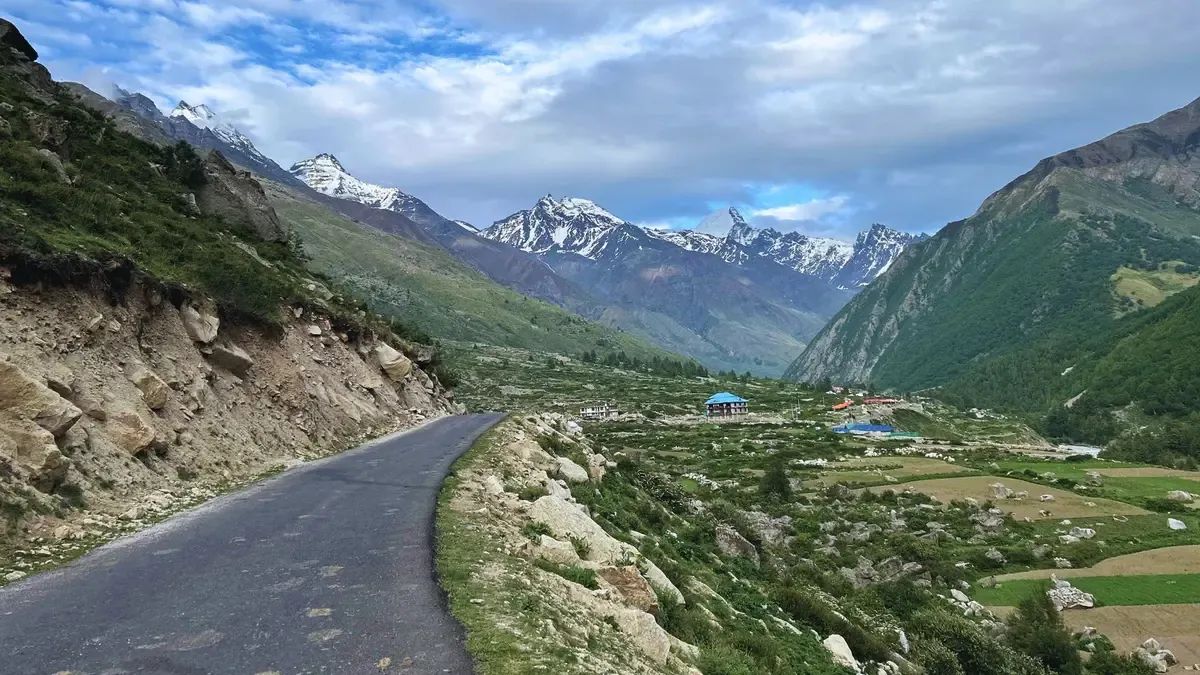
It works because the two valleys it spends its time in are genuinely different from each other and both are within a couple of hours of the highway. The Baspa is green, wide and full of orchards; the Kalpa shelf is dry, brown and sits under a six-thousand-metre wall. You can be in both inside a week without going high enough to feel it.
Why the Baspa is worth the detour
Turning up the Baspa at Karcham costs about an hour and a half each way, and it is the only part of this trip anyone hesitates about. Go.
The Sutlej is a gorge — impressive, oppressive, and mostly seen from a road carved into one wall of it. The Baspa is the opposite: a flat-floored valley with room in it, villages built out of deodar and stone, and a river running clear down the middle. The transition from one to the other happens in about ten minutes of driving and it is the most dramatic thing on the itinerary.
Chitkul is what people come for and it is not the best of it. Sangla, Batseri and Rakcham are where the valley is still being lived in rather than photographed.
The altitude, honestly
This is the trip we suggest to people who wanted Spiti and then read about acute mountain sickness.
Nothing on this route sleeps above 2,960m. Chitkul at 3,450m is a day trip from a bed 750m lower down, which is exactly the shape a body wants. Compare that with the Spiti itinerary, which sleeps at 3,650m and crosses a 4,551m pass, and where half the planning is about getting you up there slowly enough.
You may still get a headache at Kalpa on the first afternoon. Drink more water than you want to and it will be gone by dinner.
The one thing we would change if you had more time
Two more nights and we would put them at Sarahan and in the Sangla valley, in that order.
Sarahan gets a single evening on this itinerary and it deserves a morning as well — the temple compound is a working one, the village behind it is small, and the Srikhand range is straight across the valley when the cloud lifts. It is also the last comfortable altitude before the road climbs properly.
The extra Baspa night is simpler: it turns the Chitkul day from a drive into a walk. There is a good path up the river beyond the village towards the old border post, and an afternoon on it is the best hour of most people’s week.
What this trip is not
It is not a road trip. Six of the seven days have a drive in them, but only three are long, and two of those are the ones getting you to and from the Sutlej at either end. If what you want is continuous driving through big country, the Spiti loop or the Leh run is the honest answer and we will say so.
It is also not a trek. There are walks here — the Roghi road, the river path above Chitkul, the climb to Kamru — and none of them is more than a couple of hours. If you want to be on your feet all day, the Great Himalayan National Park is two valleys west and we run that one too.
Day by day
How the 7 days run
- Day 18–9 hrs
Dharamshala to Shimla
The dull day, and we would rather it were first than last. Down through Una and Bilaspur with a proper lunch stop, into Shimla by late afternoon. Nothing is planned for the evening beyond a walk on the Ridge if you still have the legs for it.
- Day 25–6 hrs
Up the Sutlej to Sarahan
Out through the orchards at Narkanda, then the road drops a very long way to meet the Sutlej at Rampur and stays with it. Sarahan is a climb off the highway at the end of the afternoon. The Bhimakali temple is in the middle of the village, in the local timber-and-stone style with a slate roof, and the evening aarti is worth being there for.
Show all 7 daysShow fewer days
- Day 34–5 hrs
Into the Baspa
Back down to the river and on through Karcham, where the Baspa comes in and the road turns up it. That turn is the moment the trip changes — the gorge closes, the road climbs on a shelf, and twenty minutes later you are in a wide green valley with orchards on both sides. Kamru fort above Sangla in the afternoon if you are up to the stairs.
- Day 424km each way, about an hour
Chitkul, and the top of the valley
Up the Baspa to the last village anyone lives in on this side, at 3,450m. Batseri on the way for the timber houses and the temple, Rakcham for the flats where the river spreads out. Chitkul itself takes an hour to walk end to end and most of a morning to leave. Back down to Sangla for the night.
- Day 546km, about 2 hrs
Sangla to Kalpa
Down the Baspa, back onto the Sutlej and up the other side. Reckong Peo on the way through for anything you have run out of — it is the last town with banks and a hospital. Kalpa is 7km and about 660m above it, on a shelf of orchards, and you arrive in time for the light coming off the Kinner Kailash wall.
- Day 6
Kalpa, Roghi and the old road
A day that does not move far. The Roghi road first — eight kilometres of single track cut into the cliff above the gorge — then the monastery and the temple in the village, and the orchards between them. In September and October the whole shelf is picking and you will be offered fruit whether you want it or not.
- Day 78–9 hrs
Down to Shimla, and out
The long one back down the gorge, with the stops you did not have time for on the way up. We drop you in Shimla, or run on to Chandigarh for an evening flight if the timings work. Getting back to Dharamshala is another day — see the questions below.
The price
What is in it, and what is not
Included
- Private car and driver for all seven days, fuel, tolls and parking
- The driver's own food and accommodation
- Hotels, twin sharing, with breakfast
- Pickup in Dharamshala, Chandigarh or Shimla
- A phone number that is answered at any hour of the trip
Not included
- Flights and trains
- Lunches and dinners
- Entry and camera fees at the temples
- Anything you buy for yourself
We do not publish a rate card. The number depends on the season, how many of you there are and the sort of hotels you want, so we price each trip on its own — and whatever we quote is what you pay.
Questions
What people ask about this one
How is this different from your Spiti trip?
Spiti passes through Kinnaur and does not stop in it. That route sleeps one night at Kalpa and drives on to Nako and Tabo the next morning, because it has Spiti to get to. This one turns up the Baspa instead, which Spiti never sees at all, and gives Kalpa two nights rather than one. The other difference is altitude: nothing here is above 3,450m and you sleep at 2,700 and 2,960, so the acclimatisation problem that shapes the Spiti itinerary does not exist.
Do we need an inner line permit?
Not for anything on this itinerary. The permit applies to the Sutlej above Pooh, on the way towards Spiti, and it is issued at Reckong Peo. Sangla, Chitkul and Kalpa are all below that line. If you decide halfway through that you want to carry on to Nako we can arrange it in Peo, but it is a different trip and it needs two more days.
Can we finish back in Dharamshala instead?
Yes, and it costs a day. Kalpa to Dharamshala is about six hundred kilometres and nobody should drive it in one go, so we break it at Shimla or Narkanda and arrive on day eight. Most people going home from here fly out of Chandigarh instead, which is why the itinerary ends the way it does.
When do the apples come off?
September into October in the Baspa, a little later at Kalpa, and it is the best time to be here — the valley is working, the light is clean and the roads are busy with fruit trucks rather than tourists. Blossom is the other answer, in late April and May, and the two are completely different trips.
Is the road actually bad?
Parts of it are. The Sutlej gorge between Jeori and Karcham is cut into rock above a river a long way down, it takes rockfall damage in the monsoon, and there are one or two places where you will want the window up. The rest is a surfaced two-lane road with rough patches. Our drivers run it several times a year and the honest planning advice is the same as for anything on this side of the range in July and August: come, but do not book a tight itinerary with a flight to catch at the end of it.
Keep reading