
Blog
Dharamshala weather, month by month
Dharamshala is not one place with one climate. Lower Dharamshala sits at about 1,300 m and Dharamkot at about 1,900 m, and that 600 m gap is why the town can be in shirtsleeves while McLeod Ganj is in cloud. Here is what each month actually does.
Written by the people who drive these roads · Last checked
The short answer
The best months in Dharamshala are March to June and September to November. July and August are a serious monsoon — this is one of the wettest inhabited places in India. Snow falls at McLeod Ganj and Dharamkot most winters between late December and February, and only rarely in lower Dharamshala 600 m below. October is the clearest month of the year.
The facts, in one place
- Lower Dharamshala sits at about 1,300 m and Dharamkot at about 1,900 m, 600 m higher.
- March to June and September to November are the reliable months for visiting.
- July and August bring a heavy monsoon; this is among the wettest inhabited places in India.
- Snow reaches McLeod Ganj and Dharamkot most years between late December and February.
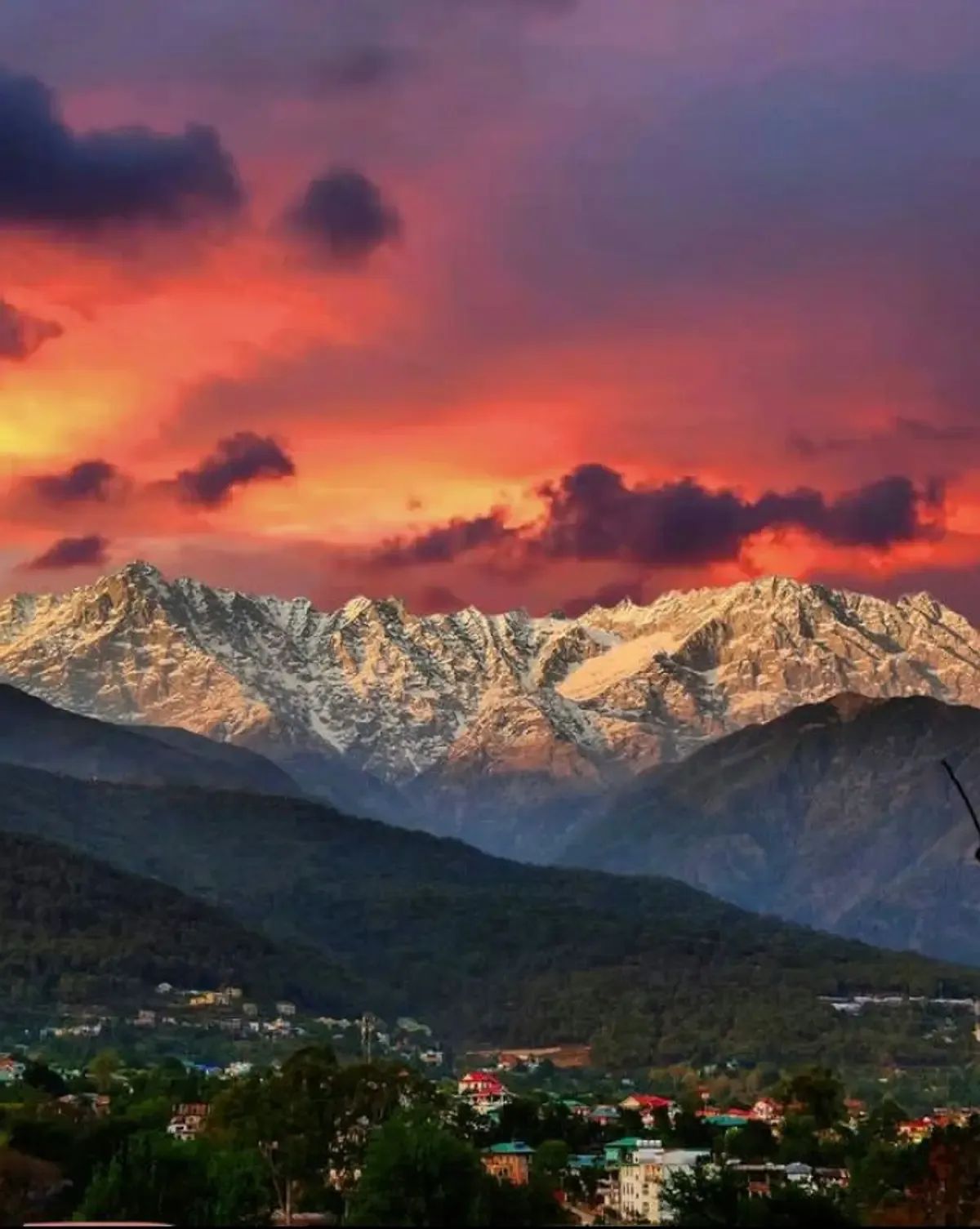
- October gives the clearest air and the most reliable Dhauladhar views of the year.
- 1,300 mDharamshala
- 1,750 mMcLeod Ganj
- 1,900 mDharamkot
- 2,828 mTriund
Read the whole postClose the post
Ask for the weather in Dharamshala and you will get one number. The problem is that “Dharamshala” covers about 600 vertical metres, and the top and the bottom of it do not have the same weather on the same day.
| Place | Roughly |
|---|---|
| Lower Dharamshala | 1,300 m |
| McLeod Ganj | 1,750 m |
| Dharamkot | 1,900 m |
| Naddi | 1,920 m |
| Triund | 2,828 m |
Four hundred metres separates the bus stand from McLeod Ganj. Six hundred separates it from Dharamkot. That is enough to put one in sun and the other in cloud, and it is enough that snow settles in one and not the other.
Keep that in mind for everything below. Where we give a temperature it is a typical daytime range around McLeod Ganj’s altitude; the lower town runs a few degrees warmer and Triund several degrees colder.
The year, month by month
| Month | Typical days | What it is like |
|---|---|---|
| January | 4–11°C | Coldest. Snow at McLeod Ganj most years. Very quiet |
| February | 5–13°C | Still cold, still snow possible. Clear spells begin |
| March | 9–18°C | Waking up. Rhododendron starts. Good |
| April | 13–23°C | Excellent. Warm days, cool nights, everything open |
| May | 17–27°C | Warm and busy. The plains escape here |
| June | 19–29°C | Hot below, pleasant above. Monsoon arrives late in the month |
| July | 18–24°C | Monsoon proper. Heavy, continuous, cloud down low |
| August | 18–24°C | The wettest month. Landslip season |
| September | 17–25°C | Clears through the month. Second half is very good |
| October | 13–22°C | The best month. Clearest air of the year |
| November | 8–18°C | Cold nights, superb visibility, thin crowds |
| December | 5–13°C | Cold. First snow up top, usually late in the month |
Those ranges are typical figures for the McLeod Ganj band rather than measurements of our own, and any given year will argue with them. The pattern is what to trust, not the decimals.
The monsoon is the thing nobody warns you about
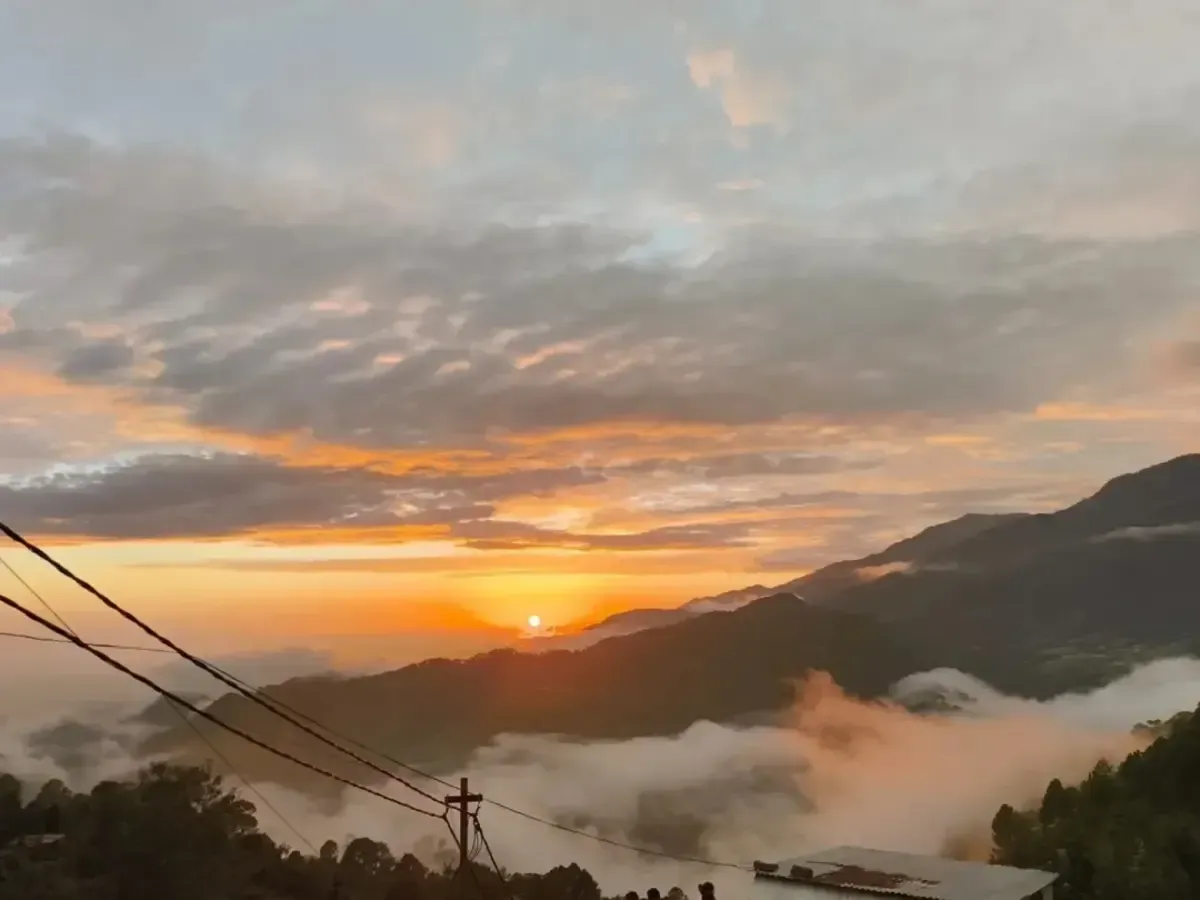
Dharamshala sits directly against the Dhauladhar. The range rises straight out of the Kangra valley with nothing in front of it, so when the monsoon comes north it hits that wall and empties. This is one of the wettest inhabited places in India.
In practice, July and August mean:
- Rain for days rather than hours.
- Cloud sitting below the ridge, so McLeod Ganj is inside it and the lower town is under it.
- The Dhauladhar invisible for a fortnight at a time.
- Occasional road slips on the hill sections, including the roads to Barot and up to Billing.
None of that makes it unvisitable. Some people love it and the valley is extraordinarily green. But if you are coming for the mountains, you will not see them, and it is better to know that now.
When it actually snows
The question we get most, and the one with the clearest answer.
Late December to February, with January the most reliable. It reaches McLeod Ganj and Dharamkot most winters. It reaches lower Dharamshala much less often — some winters not at all.
Triund holds snow on its top section from roughly December to March, which is longer than most people expect and catches out walkers who came up in trainers. There is more on that in our treks from Dharamshala post.
If snow is the reason for your trip: stay up at McLeod Ganj or Dharamkot rather than in the lower town, and come in January rather than December. December is when it might.
October, and why we keep saying it
If somebody gives us one month and asks us to pick, it is October every time.
The monsoon has gone. The air has been washed and not yet dusted. The Dhauladhar is out most days and it is genuinely startling — this is the view that gets photographed and it is only reliably there for about six weeks. It is warm enough to sit outside and cold enough to sleep well. The summer crowd has left and the winter one has not arrived.
November is nearly as good and colder. September’s second half is nearly as good and greener.
How this differs from the rest of the state
Everything above is about Kangra. It is not transferable — Spiti runs on an almost opposite calendar, and the month that is washing out Dharamshala is the one window when Spiti is at its best.
If you are planning a trip that goes beyond this valley, the statewide picture is in our guide on the best time to visit Himachal. This page is deliberately only about the weather outside our own window.
Also asked
Questions that come up
What is the best time to visit Dharamshala?
March to June, or September to November. Spring gives you rhododendron and long days; autumn gives you the clearest air of the year and the best views of the Dhauladhar. If you can only pick one month, pick October.
Does it snow in Dharamshala, and when?
It snows at McLeod Ganj and Dharamkot most winters, usually between late December and February, with January the most reliable month. Lower Dharamshala, 600 m further down, gets snow much less often — some winters not at all. This is the single most common confusion about the place: two neighbourhoods with the same name and different weather.
How bad is the monsoon in Dharamshala?
Genuinely heavy. Dharamshala sits right against the Dhauladhar wall, which wrings out the monsoon as it arrives, and it is among the wettest inhabited places in India. July and August are not a shower a day — they are days of continuous rain, cloud down to the rooftops, and roads that occasionally slip.
What is Dharamshala like in November?
One of the best months. The monsoon is long gone, the air is at its clearest, the Dhauladhar is in view most days, and the crowds have thinned. It gets properly cold after dark and the days shorten noticeably by the end of the month. Bring a warm layer and come anyway.
Is Dharamshala worth visiting in winter?
Yes, if you go up rather than staying down. McLeod Ganj and Dharamkot in January are quiet, cold and often under snow, which is the whole point. Lower Dharamshala in January is simply a cold town. Choose your altitude.
Why is McLeod Ganj colder than Dharamshala?
Because it is 400 m higher, and Dharamkot is 600 m higher again than the lower town. As a rough rule, expect about 3 to 4°C of difference for every 600 m you climb. That is why a single "Dharamshala weather" forecast is almost always wrong for at least one of the places it claims to cover.
Keep reading