Bir, Billing and Barot valley
Two nights at Bir so the weather gets a second chance at your flight, then over to Barot — a hydro valley from the 1930s with a trout river in it and almost no traffic.
- Bir
- Billing
- Jogindernagar
- Barot
Good for — Anyone who wants to fly, and then wants somewhere quiet to be afterwards
Read the full descriptionClose the description
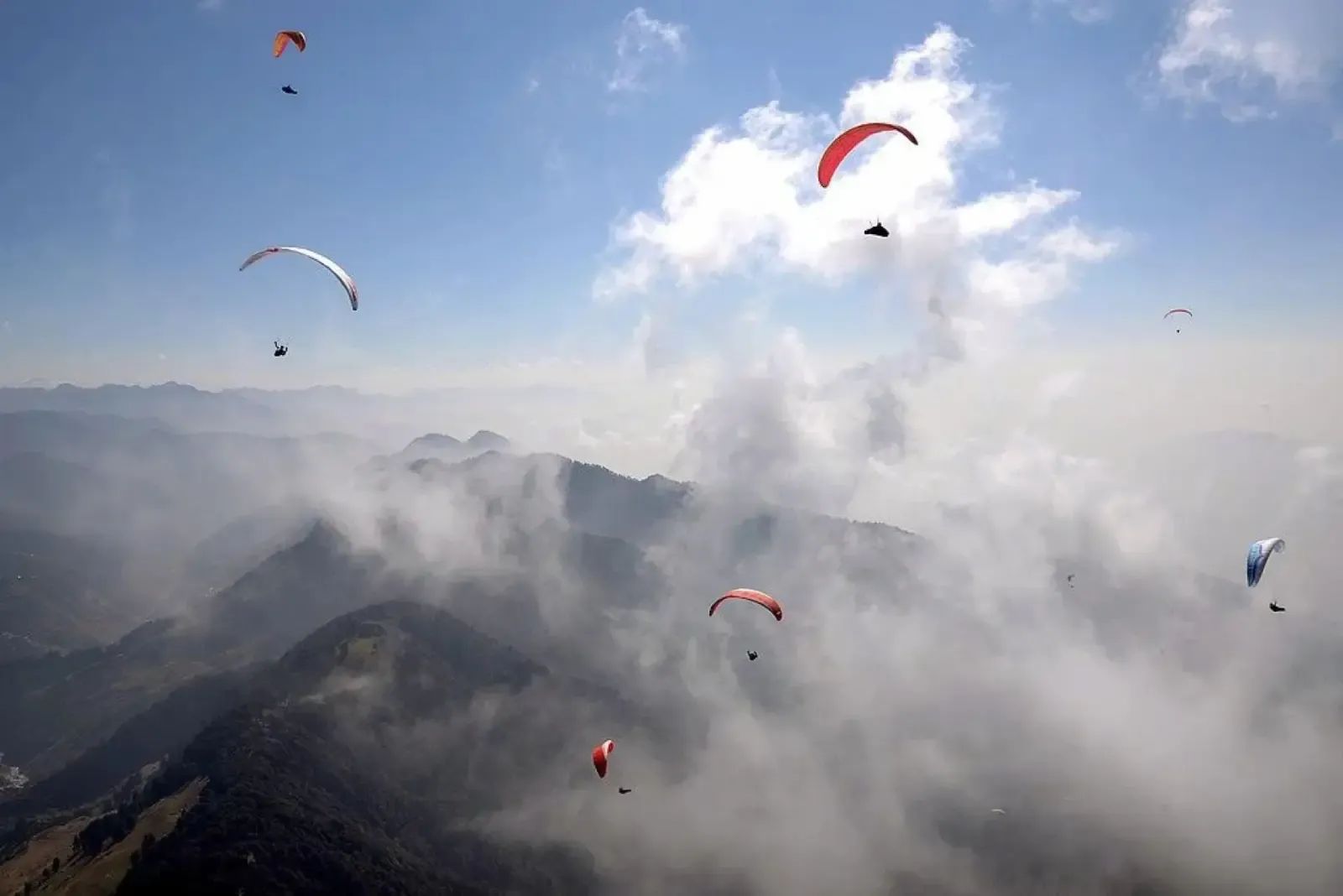
This is a flying trip with somewhere to go afterwards, and both halves are deliberate.
The flying half is built around one fact: you cannot schedule weather. Billing is an unusually reliable site and it still shuts for days at a time. So the itinerary carries a spare morning rather than a promise, and if the first one works, that morning turns into a longer stay in Barot instead. Nothing is lost either way.
Why Barot and not somewhere better known
The obvious second half of a Bir trip is Dharamshala, and most people have already done it or are about to. Barot is three hours the other way and is the opposite of a hill station: a road built to service a power scheme, a river with trout in it, and a few hundred people living along both.
It also happens to be the right shape for the day after a flight. There is nothing you have to see and nowhere you have to be at a particular time, which is what you want after a morning of standing on a ridge waiting for a wind.
The Ghatasani road
The drive from Bir is the part worth being honest about. It is short on the map and long in practice: down to Jogindernagar, along the valley to Ghatasani, then forty kilometres of single-track tarmac cut into the hillside above the Uhl, with hairpins and no barrier for most of it.
Our drivers run this road regularly and it is well within a hill car’s range. What it is not is a road to be on after dark, or in the middle of a heavy monsoon afternoon, and we plan the day so that neither happens.
What people actually do in Barot
Fish, mostly. The government hatchery on the Uhl is why the river below it holds what it does, and permits come from the same office — bring a passport or an Aadhaar card and it takes ten minutes.
After that: the valley road on a bicycle, the walk up towards Nargu from Lohardi, and looking at the bottom of the haulage line, which climbs two thousand metres straight up the hillside and has been doing so since the 1920s.
Where this goes next
Barot sits above the Pathankot–Mandi road, so the way out is a choice rather than a retrace. Mandi is two and a half hours and puts you on the Manali highway; Kullu is half a day. If you were already thinking about going further east, ending here rather than back at Dharamshala saves you an entire day of driving.
Day by day
How the 4 days run
- Day 190 min
Dharamshala to Bir
A short first day on purpose. Out through the tea belt and along the foot of the Dhauladhar, into the Tibetan colony by lunchtime. The afternoon is yours to walk the twenty minutes between the colony and the old village, which is the best way to work out where everything is before you need it.
- Day 245 min each way up to Billing
The flying day
Up early, because the cycle is cleanest in the morning and the operators launch from the top of it. The jeep to Billing is fourteen kilometres of rough climbing road and takes three quarters of an hour. You land back at Bir, and we collect you there. If the day is blown out we do not push it — that is the whole reason there is a second chance in this itinerary.
Show all 4 daysShow fewer days
- Day 33–3.5 hrs
The reserve day, or over the hill to Barot
If yesterday flew, we leave after breakfast: down to Jogindernagar, along to Ghatasani, and then forty kilometres of single track above the Uhl. If it did not, this morning is the second attempt and we drive in the afternoon instead. Either way you sleep in Barot.
- Day 43.5–4 hrs back to Dharamshala
Barot, and out
The hatchery and the foot of the haulage line before it gets warm, then as much of the valley road as you feel like walking or cycling. We start back after lunch. Onward drops to Manali or Mandi work from here too and are shorter than going back the way you came.
The price
What is in it, and what is not
Included
- Private car and driver for all four days, fuel, tolls and parking
- The jeep transfer up to Billing on the flying day
- Three nights' accommodation, twin sharing
- Pickup and drop at Gaggal airport or anywhere in Dharamshala
Not included
- The tandem flight itself, which is paid to the licensed operator at the field
- Angling permits at the Barot hatchery office
- Food, drink and anything personal
We do not publish a rate card. The number depends on the season, how many of you there are and the sort of hotels you want, so we price each trip on its own — and whatever we quote is what you pay.
Questions
What people ask about this one
Why two nights at Bir rather than one?
Because flying gets cancelled. Wind, cloud and rain close the site often enough that a single afternoon is a coin toss, and people who allow one day are the ones who drive home without having gone up. The second morning costs you a night and roughly doubles your chances.
Do we book the tandem flight in advance?
No, and be wary of anyone who takes money for one weeks ahead. Pilots are licensed by the state and work out of the landing field; we drive you there and you arrange it on the day, which is also the only honest way to price something that depends entirely on the weather.
Is the road into Barot difficult?
It is narrow and there is a lot of it — forty kilometres of single track with hairpins and no barrier after Ghatasani, which is two hours whatever the map says. It is a normal road for a hill driver and an uncomfortable one for a nervous passenger. We would not take it in heavy rain.
Can this start from Delhi or Chandigarh instead?
Yes. Add a day at the front — Chandigarh to Bir is about seven hours, Delhi about eleven — or fly to Gaggal and start as written. Most people coming from a distance pick up the Gaggal flight and save themselves the day.
Keep reading